California EV Rebates 2026: How to Save on Your Installation
Last reviewed: July 20, 2026
What Santa Rosa homeowners should know about EV charger incentives in 2026
EV charger incentives still exist for eligible Santa Rosa homeowners, but the available programs have changed. The federal residential charging credit ended for equipment placed in service after June 30, 2026, while PG&E and Sonoma Clean Power continue to offer programs that may reduce equipment costs or reward smart charging.
Eligibility depends on factors such as your electric utility account, household income, vehicle, charging equipment, installation date and electrical-panel requirements. Check the applicable program before purchasing a charger or beginning installation.
The federal EV charger tax credit ended June 30, 2026
The federal Alternative Fuel Vehicle Refueling Property Credit previously helped qualifying homeowners offset part of the cost of purchasing and installing EV charging equipment.
Under current IRS guidance, residential charging equipment had to be purchased and placed in service at a qualifying primary residence no later than June 30, 2026. Equipment placed in service after that date is not eligible for the credit.
For eligible installations completed between January 1, 2023, and June 30, 2026, the credit may equal 30% of qualified costs, up to $1,000 per charging port. The installation must also meet the federal location requirements, which generally limit eligibility to qualifying low-income or non-urban census tracts.
If your charger was installed by the deadline, retain:
- The charger purchase receipt
- The electrician’s invoice
- Proof of payment
- Permit and inspection records
- The date the charger was placed in service
- Documentation showing that the installation address is in an eligible census tract
The credit is generally claimed using IRS Form 8911. Tax eligibility can depend on circumstances beyond the installation itself, so consult the IRS Alternative Fuel Vehicle Refueling Property Credit guidance or a qualified tax professional before claiming it.
PG&E Residential EV Charging rebates
PG&E currently offers a Residential EV Charging program for eligible residential customers. Sonoma Clean Power customers may also qualify because they continue to receive electric delivery service through PG&E and are included as Community Choice Aggregation customers under the program.
Applicants must generally be:
- Active PG&E residential electric customers
- Current owners or lessees of qualifying battery-electric or plug-in hybrid vehicles
- Able to provide current California vehicle registration
- Purchasing and installing equipment from PG&E’s eligible-products list
The program offers two levels of assistance.
Standard rebate option
Eligible applicants who do not meet the income requirements for Rebate Plus may qualify for reimbursement of up to 50% of the purchase price of approved EV charging equipment.
The Standard option applies to eligible equipment rather than every charger on the market. Applicants must purchase and install qualifying equipment and submit the application within 180 days of the purchase.
PG&E may request:
- A residential electric bill and account information
- Current California vehicle registration
- Proof of charger purchase
- Photographs of the installed equipment and serial number
- The electrician’s invoice for hardwired equipment
Rebate Plus option
Income-qualified households may be eligible for more substantial assistance. PG&E currently states that qualifying applicants may receive:
- Up to $2,000 for installing eligible EV charging equipment
- Up to $5,000 when an electrical-panel upgrade and eligible charger installation are required
Income eligibility may be established through household income or participation in an approved public-assistance program. Rebate Plus uses a preapproval process and requires the work to be completed by a contractor participating in PG&E’s Trade Ally Network.
PG&E says these rebates are offered on a first-come, first-served basis and are generally limited to one per eligible household. Equipment lists, funding and eligibility requirements can change, so review the current PG&E Residential EV Charging program before buying equipment.
Sonoma Clean Power smart-charging rewards
Sonoma Clean Power offers rewards for eligible customers who allow a compatible EV or Wi-Fi-connected charger to participate in managed charging.
These rewards are different from an installation rebate. Instead of reimbursing the cost of electrical work, the program encourages drivers to shift charging away from periods of high demand or toward times when cleaner energy is more readily available.
Current Sonoma Clean Power programs advertise:
- A $100 enrollment reward
- A $5 monthly reward for eligible smart-charging participation
- The possibility of an additional $5 per month for completing the required number of designated daytime charging events
Customers generally connect either a compatible EV or an eligible smart charger to the program—not both. Compatibility varies by vehicle, model year and charger, and customers must meet Sonoma Clean Power’s participation requirements.
If you are choosing a smart charger, program compatibility may be one factor to consider. It should not be the only factor: the charger must also suit your vehicle, electrical capacity, installation location and long-term needs.
Review the current equipment list and conditions on the Sonoma Clean Power EV Rewards page.
Specialized programs may apply to some projects
Additional programs may be available for installations that fall outside a typical single-family home project.
For example, Sonoma Clean Power advertises its Community Charge program for qualifying workplaces, multifamily properties and fleets. California also periodically funds charging projects through programs administered by the California Energy Commission and other organizations.
Bidirectional charging projects may qualify for separate pilot programs, but they require compatible vehicles, charging equipment and home-integration systems. These projects should not be confused with a conventional Level 2 home charger.
Program availability, geographic eligibility and funding cycles change. Commercial-property owners, apartment communities, nonprofits and fleet operators should investigate programs created specifically for their type of installation rather than relying on residential rebate information.
Check eligibility before choosing your charger
Incentives should be considered before—not after—selecting equipment. A charger can be well designed and appropriate for your vehicle but still be ineligible for a particular rebate.
Before making a purchase:
- Identify your electricity provider. Determine whether you receive generation service from Sonoma Clean Power or PG&E and confirm the PG&E account associated with the property.
- Check the current program page. Confirm that applications remain open and funding is available.
- Review the eligible-equipment list. Do not assume every Wi-Fi-connected or safety-certified charger qualifies.
- Determine whether preapproval is required. Some programs allow applications after installation, while others require approval before work begins.
- Confirm contractor requirements. A program may require a licensed electrician or a contractor from an approved network.
- Complete an electrical assessment. The charger, circuit length, panel capacity and possible load-management options can materially affect the installation.
- Keep complete documentation. Save receipts, invoices, serial numbers, photographs, permits, inspection records and approval correspondence.
- Verify deadlines again before submitting. Purchase dates, installation dates and application deadlines may all be different.
Incentives should support a sound installation—not determine it
A rebate can make an appropriate project more affordable, but it should not lead you to select unsuitable equipment or avoid necessary electrical work.
The right installation begins with your vehicle, daily driving, parking location, electrical capacity and future plans. Incentive eligibility comes after those needs are understood.
Programs and funding can change without notice. Always verify current terms with the agency or utility administering the program before making a financial decision.
Planning an EV charger installation in Santa Rosa?
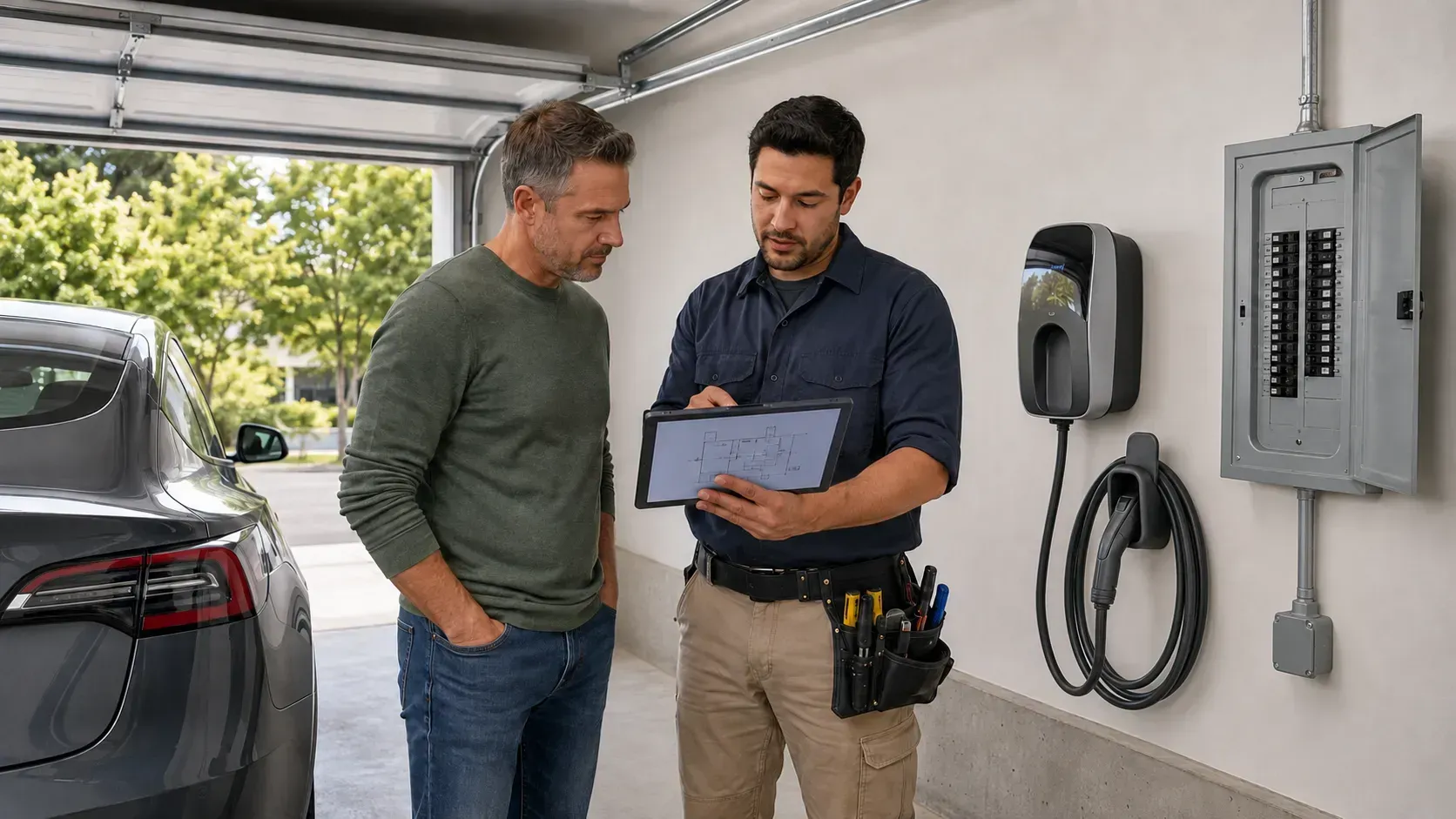
If you are considering home EV charging, begin with an assessment of your electrical panel, proposed charger location, vehicle requirements and available incentives.
Call
(707) 360-4114 or use our contact form to discuss your project and the next steps toward a safe, properly planned installation.
Contact Us
Contact Us - Blog - EV Incentives 2026