Comparing EV Charger Installation Quotes
Last reviewed: July 22, 2026
What a Complete EV Charger Installation Quote Should Include
Comparing EV charger installation quotes involves more than finding the lowest number at the bottom of the page. Two estimates may appear to describe the same project while proposing different charging capacities, materials, wiring routes or responsibilities.
One installer may include the charger, permit and final inspection. Another may assume that the homeowner will provide the equipment and handle permitting. One quote may include a short, exposed conduit route, while another includes routing through finished walls.
Neither quote is necessarily wrong. The challenge is determining whether they describe the same result.
A useful comparison begins with a consistent project description and written estimates that explain what is included, excluded and subject to change.
Define the Charging Result You Need
Before requesting quotes, identify what the installation should accomplish.
Consider:
- Your vehicle’s maximum AC charging rate
- Average daily mileage
- Typical overnight parking time
- Preferred charger location
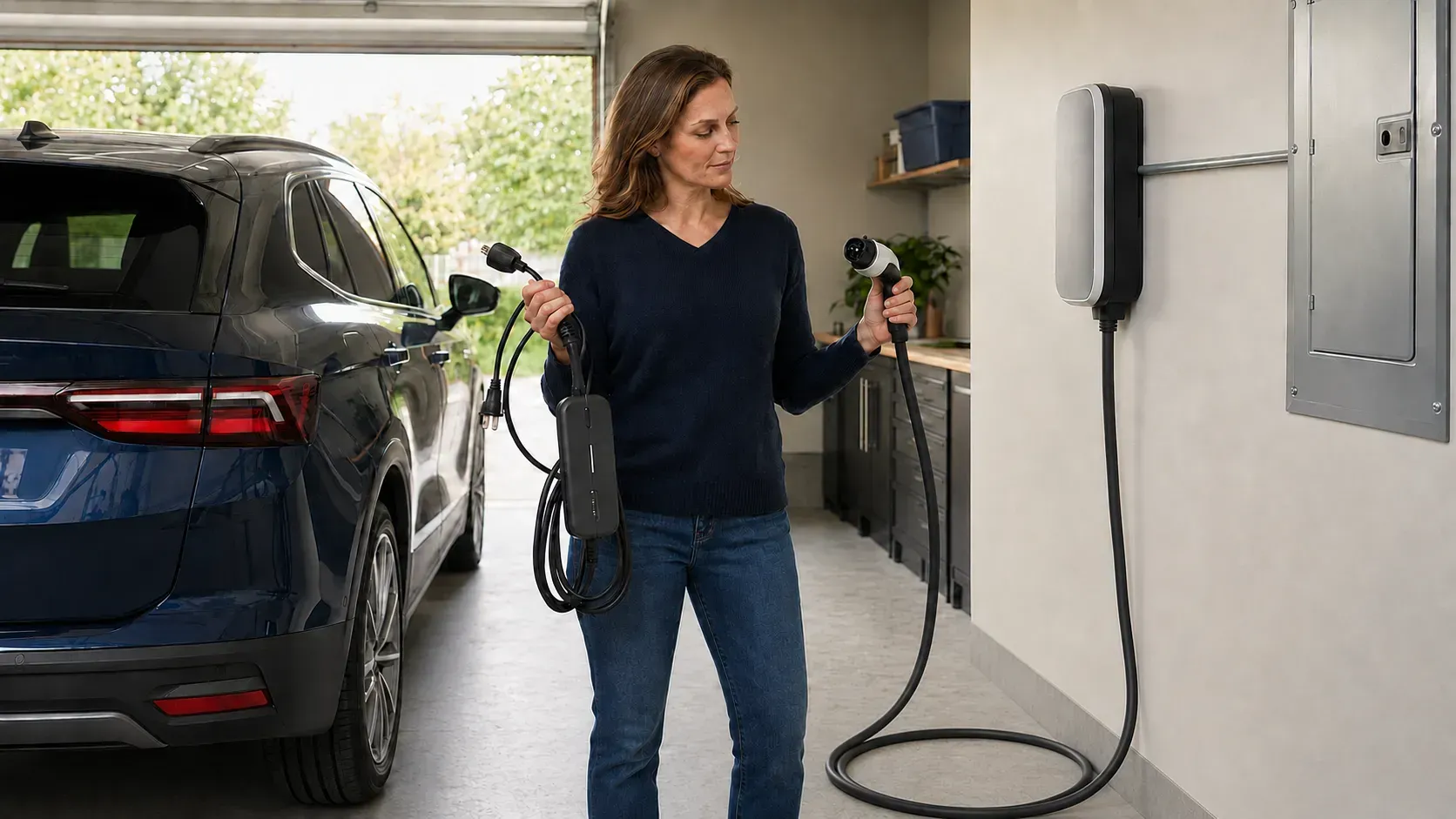
- Plug-in or hardwired equipment
- Smart-charger features
- Outdoor exposure
- A possible second EV
- Future home electrification plans
You do not necessarily need the highest-output charger your electrical service can support. A lower-capacity Level 2 installation may comfortably replace your daily driving overnight while avoiding unnecessary electrical work.
Conversely, comparing one quote for a 32-amp charger with another for a 48-amp charger is not a true price comparison. Those installations require different circuit capacities and may involve different materials.
Our guide to choosing the right charger for your EV can help establish an appropriate charging target before estimates are requested.
Give Each Installer the Same Information
Every installer should begin with the same basic project description.
Provide:
- Vehicle make and model
- Charger model, if already selected
- Desired charging capacity
- Electrical-panel location
- Preferred charger location
- Approximate distance between them
- Indoor or outdoor placement
- Photos of the panel and proposed location
- Information about solar or battery equipment
- Known future electrical projects
An onsite assessment may still be necessary, but consistent starting information reduces differences caused by assumptions.
If one contractor inspects the property while another provides a price using only a brief phone description, their estimates may not reflect the same level of understanding.
Compare the Proposed Charging Capacity
A written quote should identify the charger output or circuit capacity being proposed.
Look for information about:
- Charger amperage
- Circuit and breaker size
- Plug-in or hardwired connection
- Whether the charger is adjustable
- The output at which it will be configured
- Whether that output matches the vehicle and daily driving needs
A quote that simply says “install EV charger” does not provide enough information.
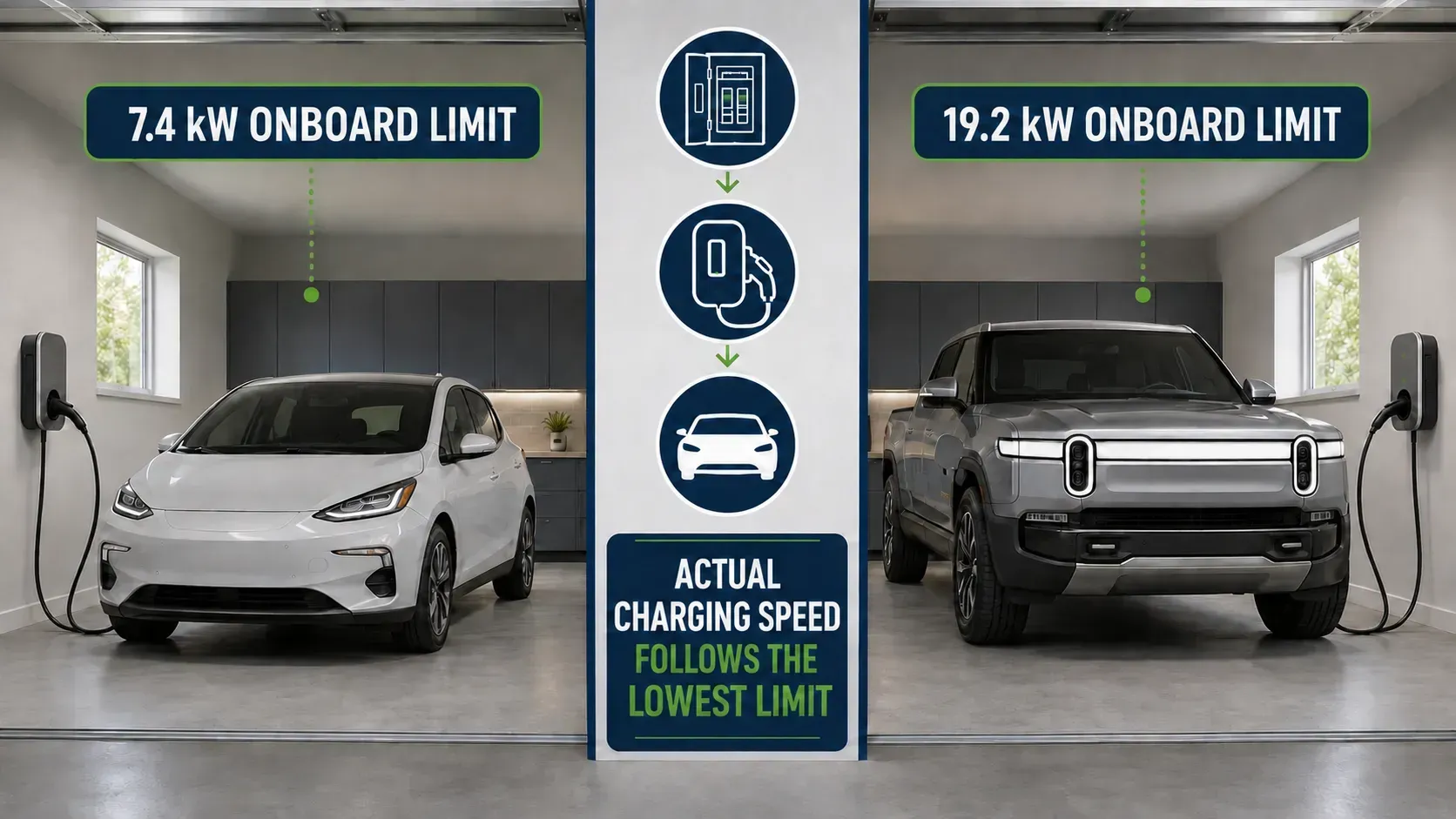
The circuit, charger and vehicle each influence actual charging speed. If one estimate proposes more capacity, ask whether the vehicle can use it and whether it provides meaningful future value.
Read our Level 1 versus Level 2 charging comparison for additional context.
Review the Wiring Route
Distance from the electrical panel to the charger is an important cost factor, but accessibility matters too.
A short route through finished walls may require more labor than a longer route through an unfinished garage or accessible crawl space. Outdoor projects may involve weather-rated materials, trenching or restoration.
Ask each installer to describe the proposed route:
- Surface-mounted conduit
- Interior wall or ceiling routing
- Attic or crawl-space access
- Exterior conduit
- Underground conduit
- Detached-garage wiring
- Penetrations through finished surfaces
Confirm whether drywall repair, painting, landscaping or pavement restoration is included.
Two quotes can differ substantially because they propose different routes. The lower price may use visible conduit while the higher quote conceals more of the installation. The homeowner should decide whether that difference is important.
Confirm That Panel Capacity Was Evaluated
An unused breaker position does not necessarily mean the home can support the proposed charger.
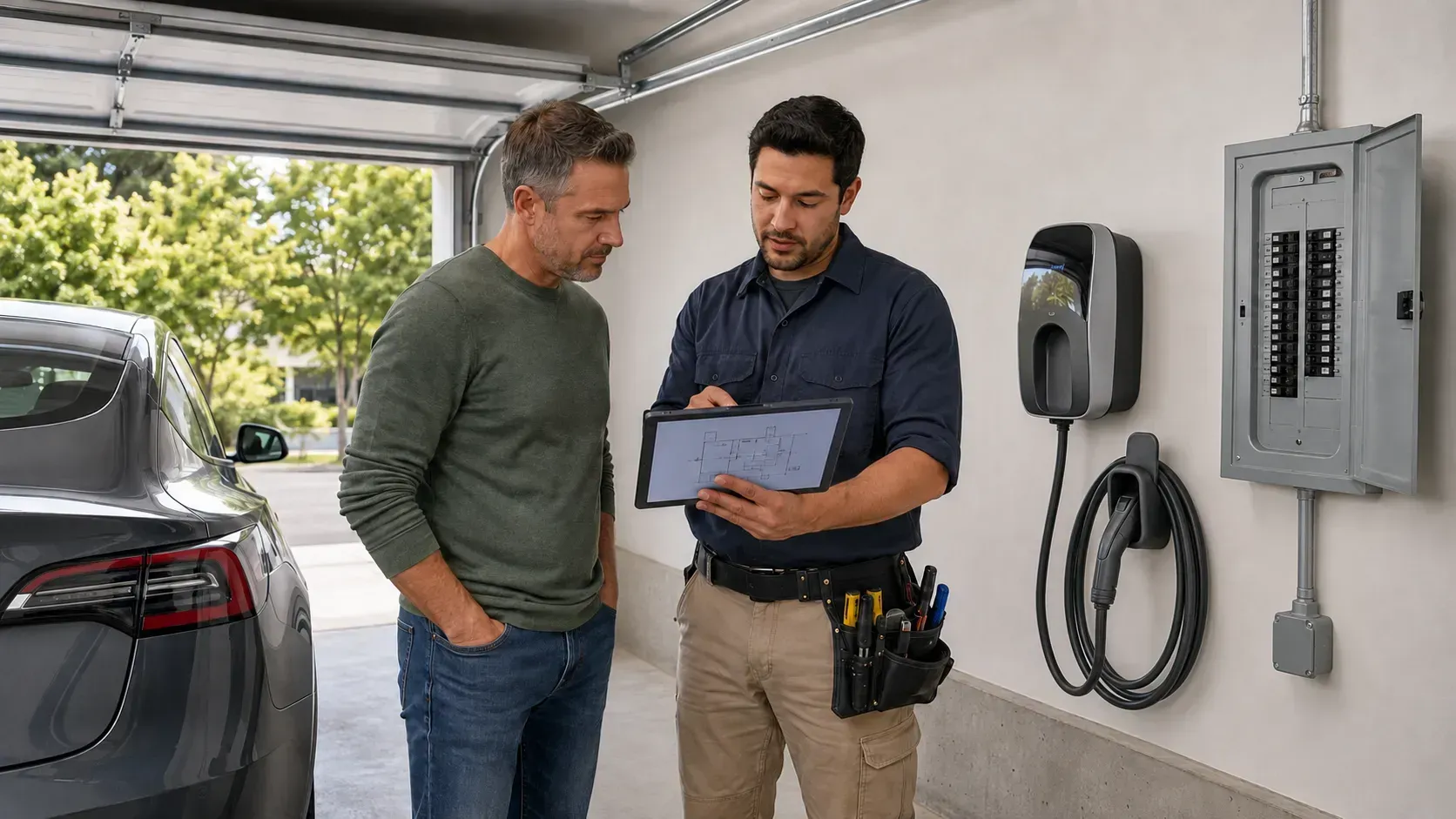
A complete assessment should consider the electrical-service rating and major household loads. If one installer includes a load assessment and another does not mention panel capacity, ask for clarification.
Possible recommendations may include:
- Installing the charger at the desired output
- Configuring it for a lower output
- Adding load-management equipment
- Installing a subpanel
- Replacing the electrical panel
- Upgrading the electrical service
These alternatives can have very different costs and charging results.
If a panel or service upgrade is proposed, ask why it is necessary and whether lower charging output or approved load management could meet the household’s needs.
Our electrical panel assessment guide explains the questions that should be addressed.
Identify Who Supplies the Charger
Some estimates include charging equipment. Others cover installation only.
The quote should identify:
- Charger manufacturer and model
- Equipment price
- Connector type
- Cable length
- Maximum output
- Indoor or outdoor suitability
- Smart or network features
- Manufacturer warranty
- Whether the homeowner may supply the equipment
If the homeowner supplies the charger, confirm whether the installer has reviewed its specifications and will warranty the installation work.
A low installation price may exclude a charger that another estimate includes. That difference should be separated before comparing totals.
Avoid purchasing equipment before confirming that it is compatible with the vehicle, proposed circuit and installation location.
Ask What Materials Are Included
A useful quote should provide more detail than “labor and materials.”
Depending on the project, materials may include:
- Breaker
- Conductors
- Conduit
- Junction boxes
- Disconnecting equipment
- Receptacle
- Equipment mounting hardware
- Outdoor-rated components
- Cable hanger
- Bollards or impact protection
- Load-management equipment
Homeowners do not need to become electrical-material experts, but the estimate should establish the basic installation method and scope.
If two quotes differ significantly, ask whether the difference involves material type, conductor length, equipment capacity or installation route. The answer may reveal that the estimates are not proposing equivalent work.
Confirm Permit and Inspection Responsibility
Permits and inspections should be addressed in writing.
Ask:
- Is the permit included?
- Who will prepare and submit the application?
- Are permit fees included?
- Who will schedule the inspection?
- Are corrections required by the inspector included?
- Will the homeowner receive the approved permit record?
The City of Santa Rosa provides building-permit information and EV charging station submittal requirements. Current requirements should be confirmed through the City of Santa Rosa Building Division.
An estimate that excludes permitting may appear less expensive, but the homeowner could be assuming additional cost and responsibility.
See our guide to EV charger permits in Santa Rosa for an overview.
Look Closely at Exclusions and Allowances
Some project conditions cannot be confirmed until work begins. A written quote should distinguish known work from assumptions.
Common exclusions may include:
- Panel or service upgrades
- Utility charges
- Trenching
- Drywall repair
- Painting
- Concrete or pavement restoration
- Hazardous-material work
- Internet or Wi-Fi improvements
- Charger hardware
- Permit fees
- Unforeseen existing electrical deficiencies
An allowance is an estimated amount reserved for work or material that has not been finalized. Ask what happens if the actual cost exceeds the allowance.
A quote containing exclusions is not automatically incomplete. The important point is that the homeowner understands what could be charged separately.
Ask How Changes Will Be Handled
Unexpected conditions can arise, particularly in older homes or where wiring is concealed.
Before work begins, ask how changes will be documented and approved. A change order should describe:
- The newly discovered condition
- The additional work
- The price change
- Any schedule impact
- The homeowner’s authorization
Avoid relying on verbal understandings for significant additions.
If an installer anticipates a possible complication, ask whether it can be investigated before the contract is signed. Additional information may allow the quote to become more precise.
Compare Warranties and Support
The equipment warranty and installation warranty are separate.
The charger manufacturer may cover defects in the hardware. The installer may provide a workmanship warranty covering the circuit, mounting and connections.
Ask:
- How long is the workmanship warranty?
- What does it cover?
- Who handles a charger warranty claim?
- Is troubleshooting included?
- Are service-call charges possible?
- Who should be contacted if charging becomes unreliable?
- Will the installer return for inspection corrections?
A slightly higher quote may provide more complete post-installation support. That has value, particularly if the homeowner does not want to coordinate separately with the equipment manufacturer and electrician.
Verify Contractor Information
Before accepting a quote, verify the contractor’s license status and confirm that the business information on the estimate matches the license record.
California homeowners can use the Contractors State License Board’s online license-check service. The CSLB also provides homeowner guidance covering contracts, references, permits and contractor selection.
Consider asking for:
- License information
- Proof of insurance
- Recent references
- Experience with EV charging equipment
- Examples of similar projects
- A written contract
- Estimated start and completion dates
A polished estimate alone does not establish qualifications, just as a simple estimate does not automatically indicate poor work. Verification should be part of every hiring decision.
Build a Side-by-Side Comparison
A simple comparison table can make differences easier to identify.
| Quote Item | Installer A | Installer B | Installer C |
|---|---|---|---|
| Charger Output | |||
| Circuit Capacity | |||
| Charger Included | |||
| Wiring Route | |||
| Panel work | |||
| Load management | |||
| Permit included | |||
| Inspection included | |||
| Surface repairs | |||
| Workmanship warranty | |||
| Exclusions | |||
| Total price |
Blank or unclear items are questions to ask—not automatic reasons to reject an estimate.
Once the scopes are aligned, the prices become much more meaningful.
Compare Total Value, Not Just Total Price
The lowest quote may be the best value when it includes the right capacity, appropriate materials, permitting and dependable support. A higher quote may also be justified by a more difficult wiring route, included charger, longer warranty or broader project scope.
The goal is not to avoid inexpensive quotes. It is to understand why prices differ.
Before choosing an installer, make sure you can answer:
- What charging result will I receive?
- Can my electrical system support it?
- What equipment and materials are included?
- How will the circuit reach the charger?
- Who handles permits and inspection?
- What work is excluded?
- How will unexpected changes be approved?
- What warranty and support are provided?
A complete quote should make those answers clear.
Contact us to discuss your Santa Rosa home, vehicle and charging needs. We can help you understand the proposed scope so you can compare EV charger installation quotes with confidence.
Contact Us
Contact Us - Blog - Comparing Quotes