The Ultimate Guide to Home EV Charging in Santa Rosa
Last reviewed: July 21, 2026
Home EV Charging in Santa Rosa: What to Know Before You Install
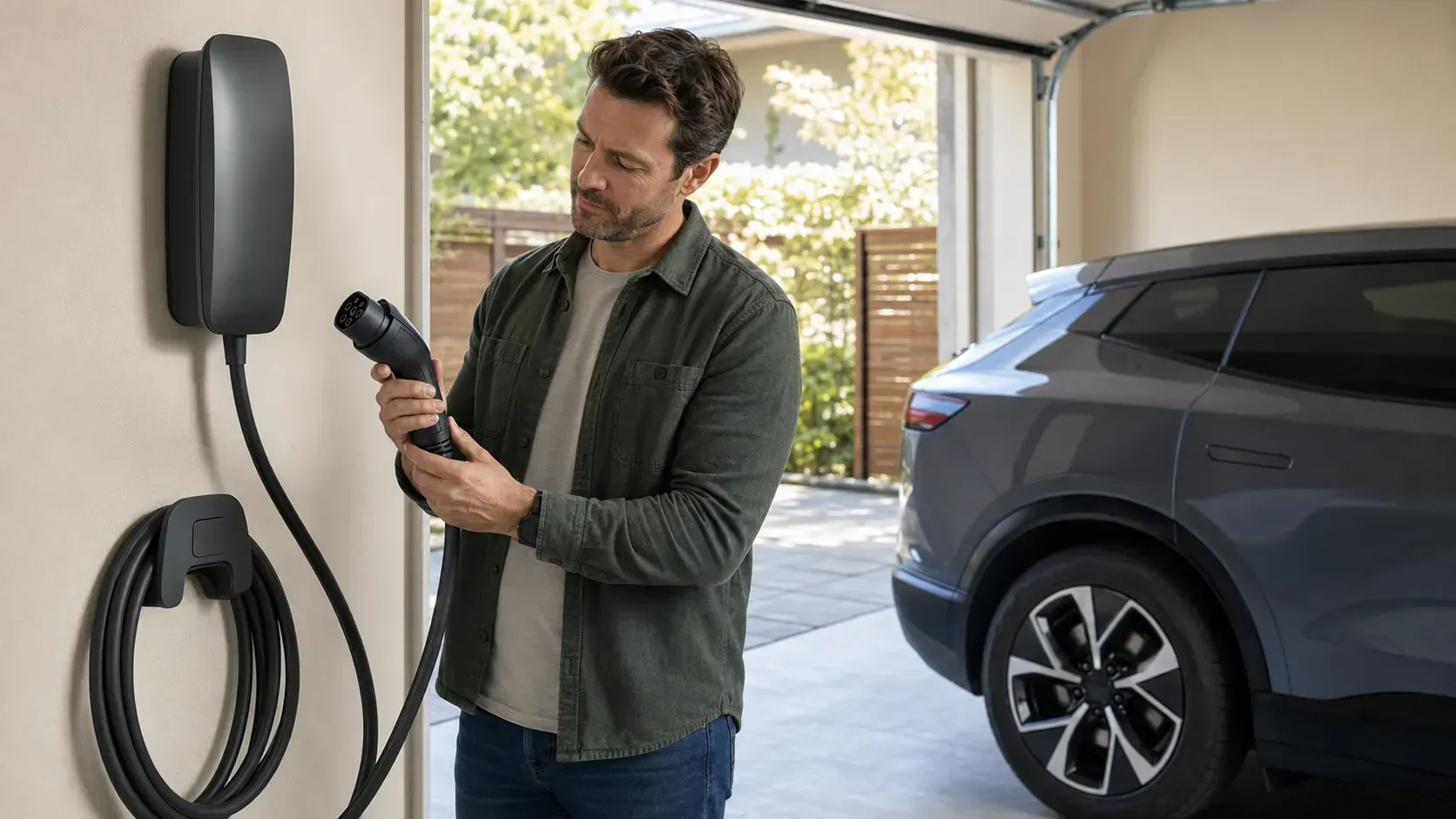
Home charging is one of the biggest advantages of owning an electric vehicle. Instead of making routine trips to a gas station or relying primarily on public chargers, you can plug in at home and begin most days with the range you need.
The right charging setup, however, is not necessarily the fastest charger available. It is the one that fits your vehicle, daily driving, electrical system, parking location, utility rate and future plans. Before installing an EV charger at your Santa Rosa home, it helps to understand the available options and the decisions that affect the project.
Start With Your Daily Driving Needs
Many homeowners begin by asking, “How fast can I charge?” A more useful question is, “How much driving do I need to replace each day?”
A driver who travels 25 miles on an average day has different charging needs from someone who drives 100 miles, returns home with a nearly depleted battery or operates two electric vehicles. Your typical overnight parking time matters as well. A vehicle parked at home for 10 or 12 hours may not require the maximum charging speed it can accept.
Consider:
- Your average daily mileage
- How often you arrive home with a low battery
- How many hours the vehicle is normally parked
- Whether you have a plug-in hybrid or a fully electric vehicle
- Whether a second EV may be added in the future
- Whether you need to recover substantial range between trips
Thinking about your actual routine can prevent both an undersized installation and unnecessary electrical work.
Level 1 Charging: The Basic Option
Level 1 charging uses a standard 120-volt household outlet. It is the slowest home-charging method, but it can be entirely adequate for some drivers.
It may work well for a plug-in hybrid, a vehicle driven relatively few miles each day or a homeowner who has long and predictable overnight charging periods. It can also provide a temporary solution while a Level 2 installation is being planned.
The outlet should be in good condition, properly grounded and suitable for the continuous electrical load created by EV charging. An extension cord should not be treated as a permanent charging solution. If there is any uncertainty about the outlet or circuit, have it evaluated by a qualified electrician.
Learn more about whether Level 1 charging is sufficient for your needs.
Level 2 Charging: The Most Common Home Upgrade
Level 2 equipment operates on a 240-volt circuit and charges considerably faster than Level 1. The U.S. Department of Energy estimates that Level 2 charging commonly adds approximately 10 to 30 miles of range per hour, although actual performance depends on the vehicle and equipment. The Department of Energy explains the differences between home-charging levels.
For many Santa Rosa homeowners, Level 2 provides a practical balance of charging speed and convenience. It can replenish a typical day’s driving in a few hours and restore a substantially depleted battery overnight.
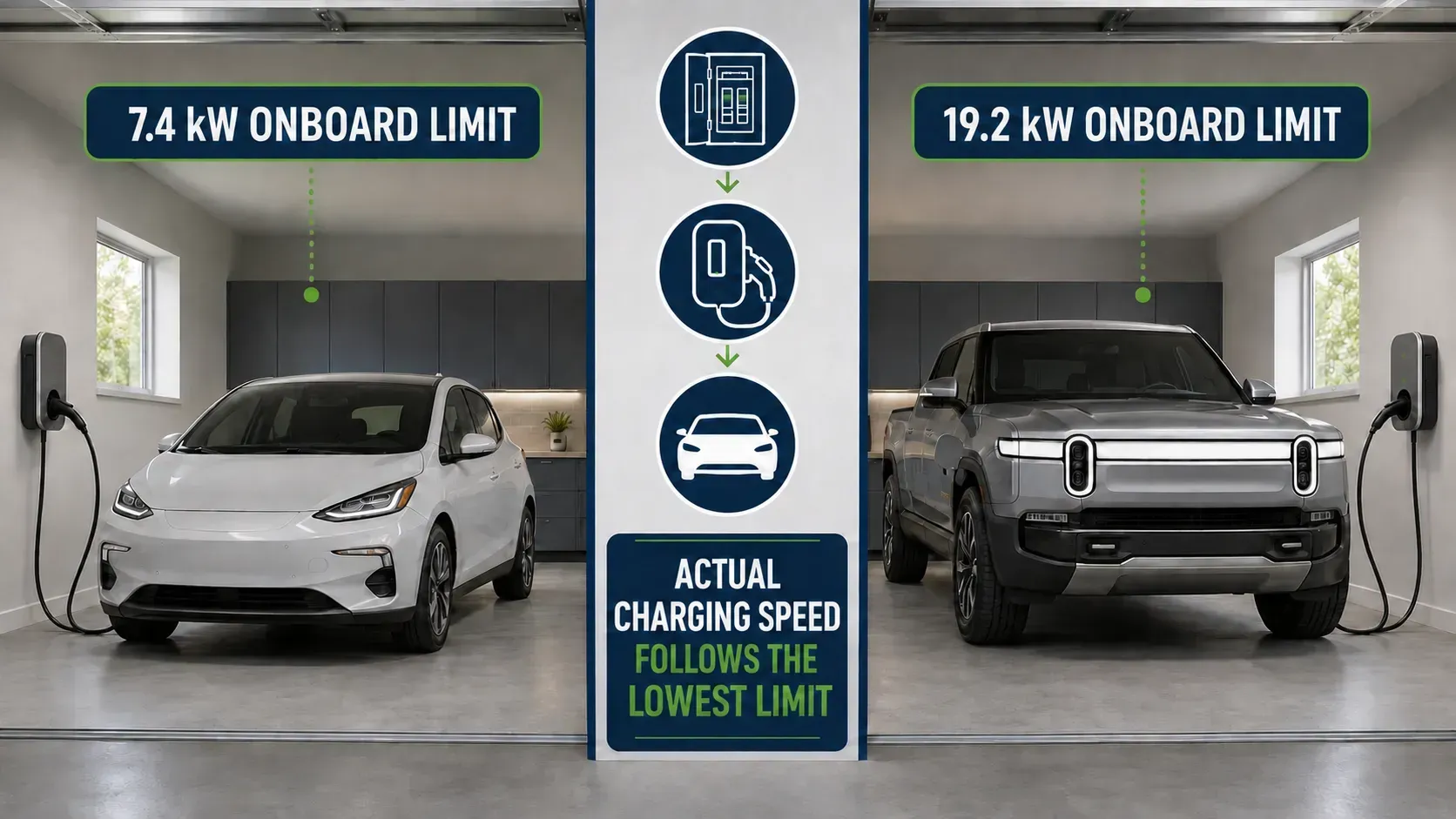
Not every Level 2 charger must operate at its highest possible amperage. The appropriate circuit size should be based on the vehicle’s charging capability, the home’s available electrical capacity and the owner’s actual needs. Installing a more powerful unit does not make the vehicle charge faster than its onboard charger will allow.
Read more about Level 2 home EV charging.
Can Your Electrical Panel Support the Charger?
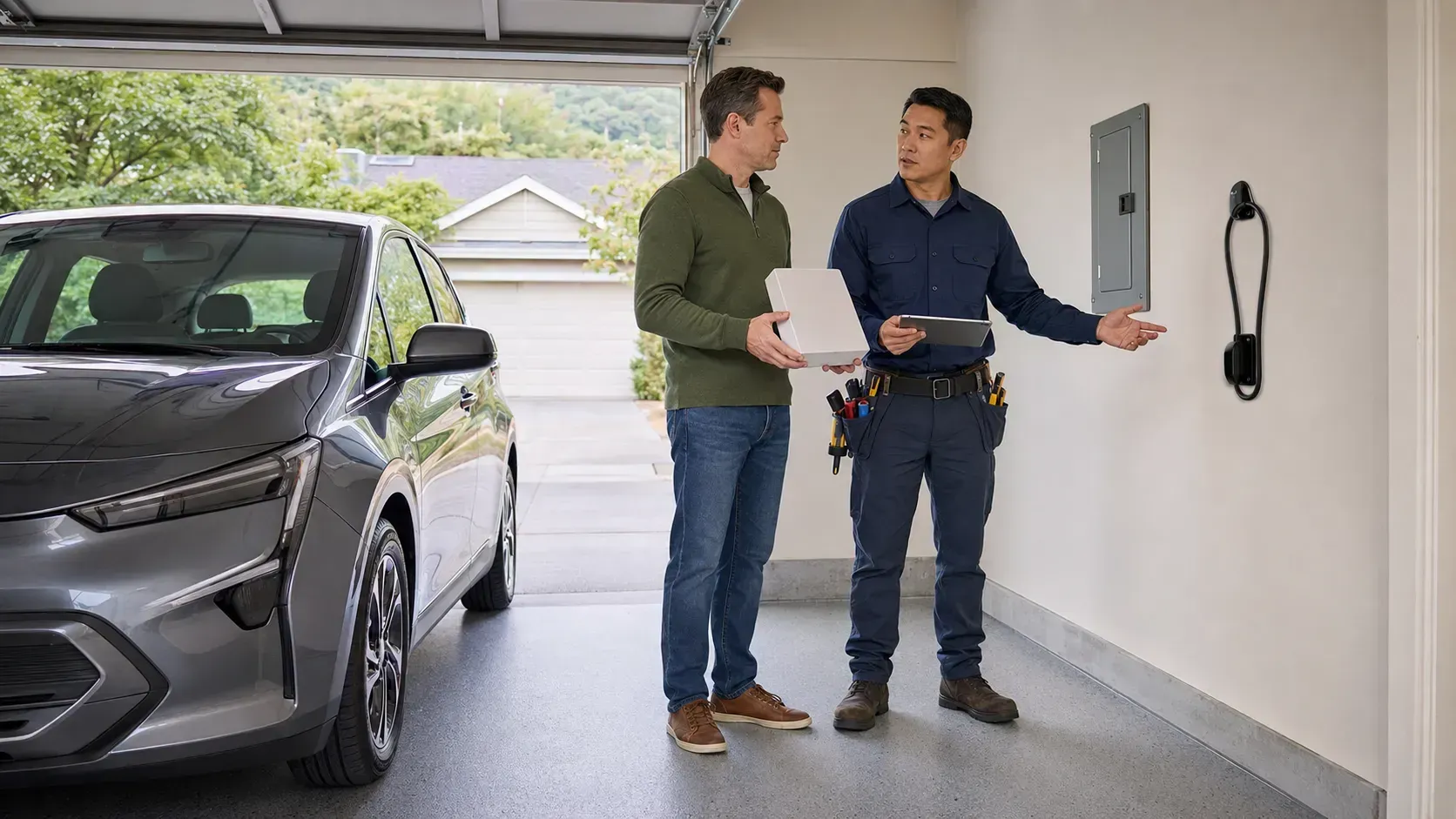
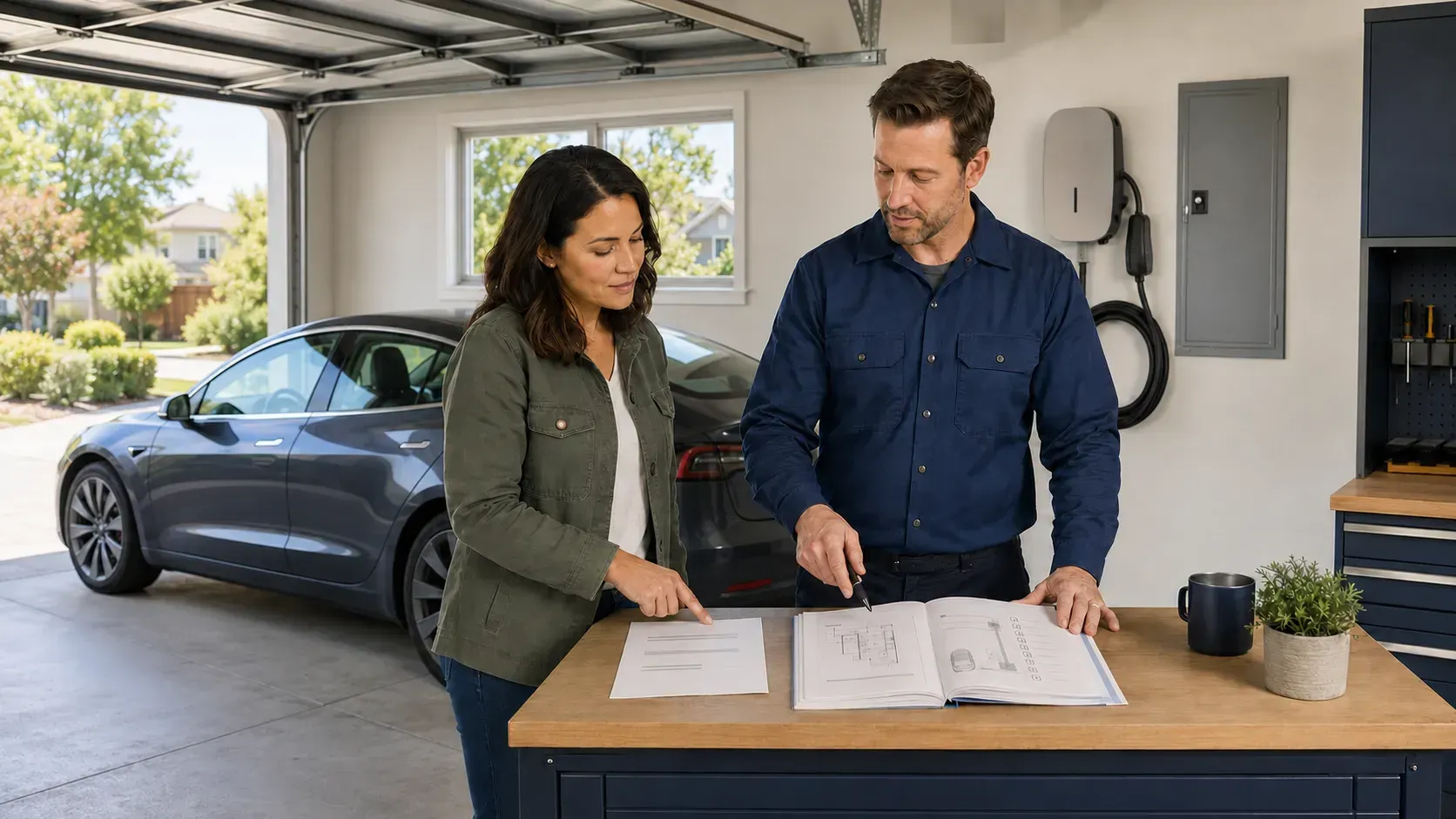
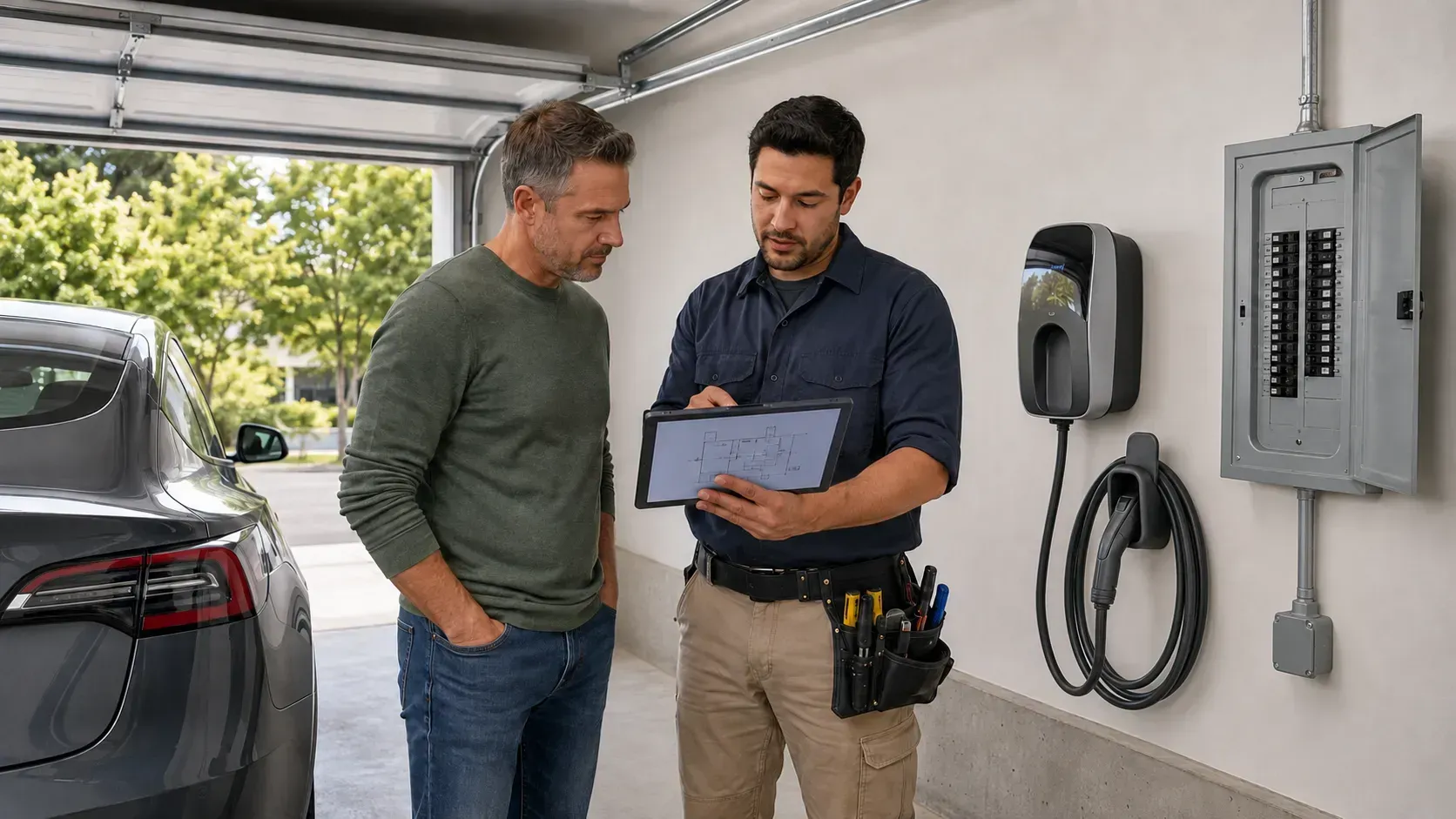
Before selecting equipment, an electrician should determine whether the electrical system can safely support the additional continuous load.
This assessment includes more than looking for an unused breaker position. The electrician may consider:
- The electrical service rating
- Existing household loads
- Major appliances and heating or cooling equipment
- Available panel space
- The proposed charger output
- The distance between the panel and charging location
- Existing solar panels, battery storage or other electrification plans
Some homes can accommodate Level 2 charging without a panel upgrade. Others may require a lower charger setting, load-management equipment, a new subpanel or a service upgrade.
Smart load-management systems can sometimes adjust EV charging when household electrical demand rises. This may create a workable solution when the panel cannot support the charger and all major household loads operating at full capacity simultaneously.
Our guide to EV charger electrical panel assessment explains what should be evaluated.
Choose the Charging Location Carefully
Installation cost and everyday convenience are strongly influenced by charger placement.
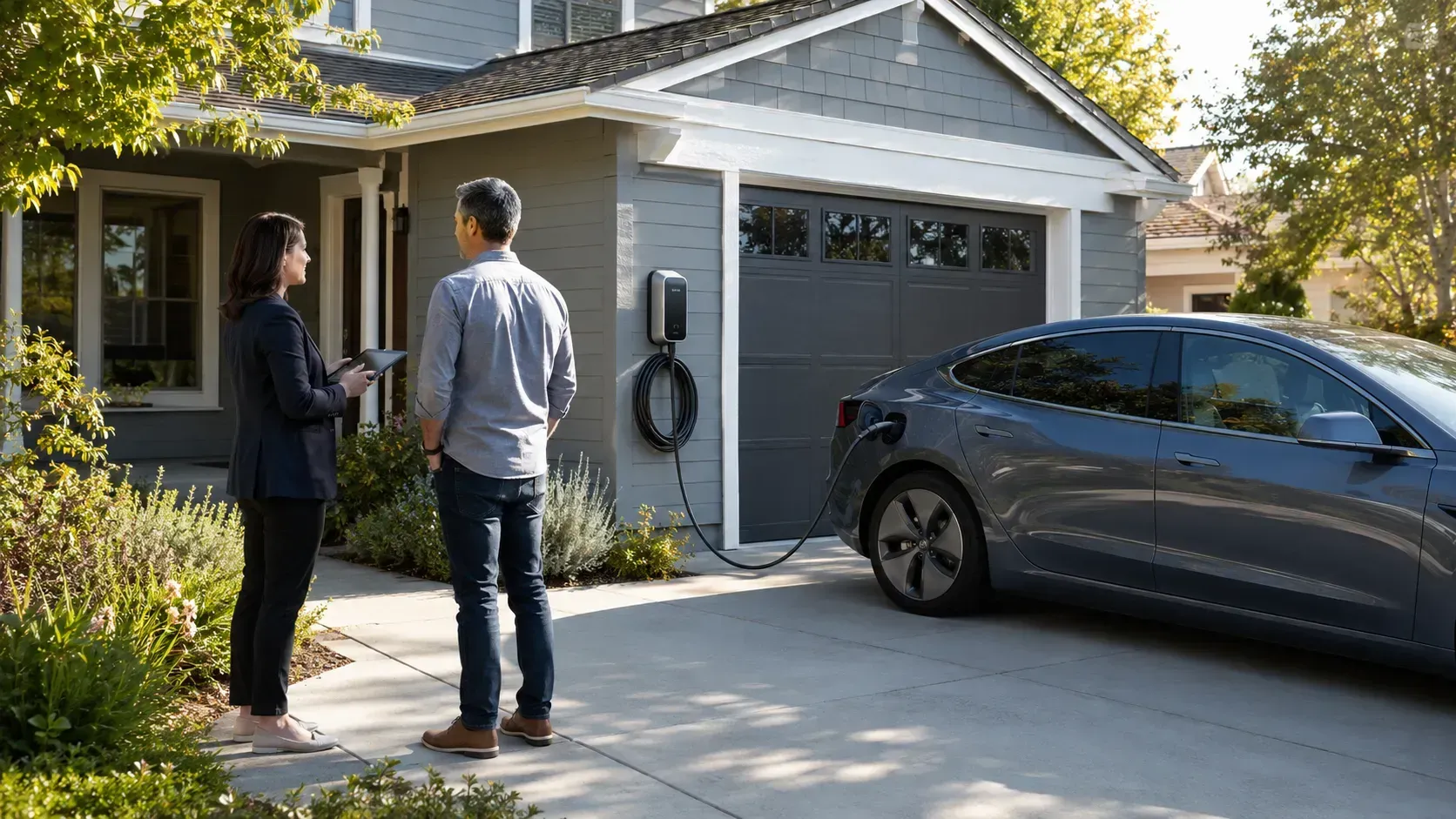
A location near the electrical panel generally requires less wiring than one on the opposite side of the house. That does not always make it the best location, however. The charging cable must comfortably reach the vehicle’s charge port without being stretched, creating a tripping hazard or crossing an area where it could be damaged.
Think about how the vehicle is normally parked and whether the replacement vehicle may have its charge port in a different location. Cable length, wall space, garage storage and the position of doors and walkways should all be considered.
Outdoor charging is also possible when the equipment is appropriately rated and installed for the environment. Weather exposure, mounting surfaces, cable storage, physical protection and the route from the electrical panel become especially important.
See what is involved in an outdoor EV charger installation.
Plug-In or Hardwired?
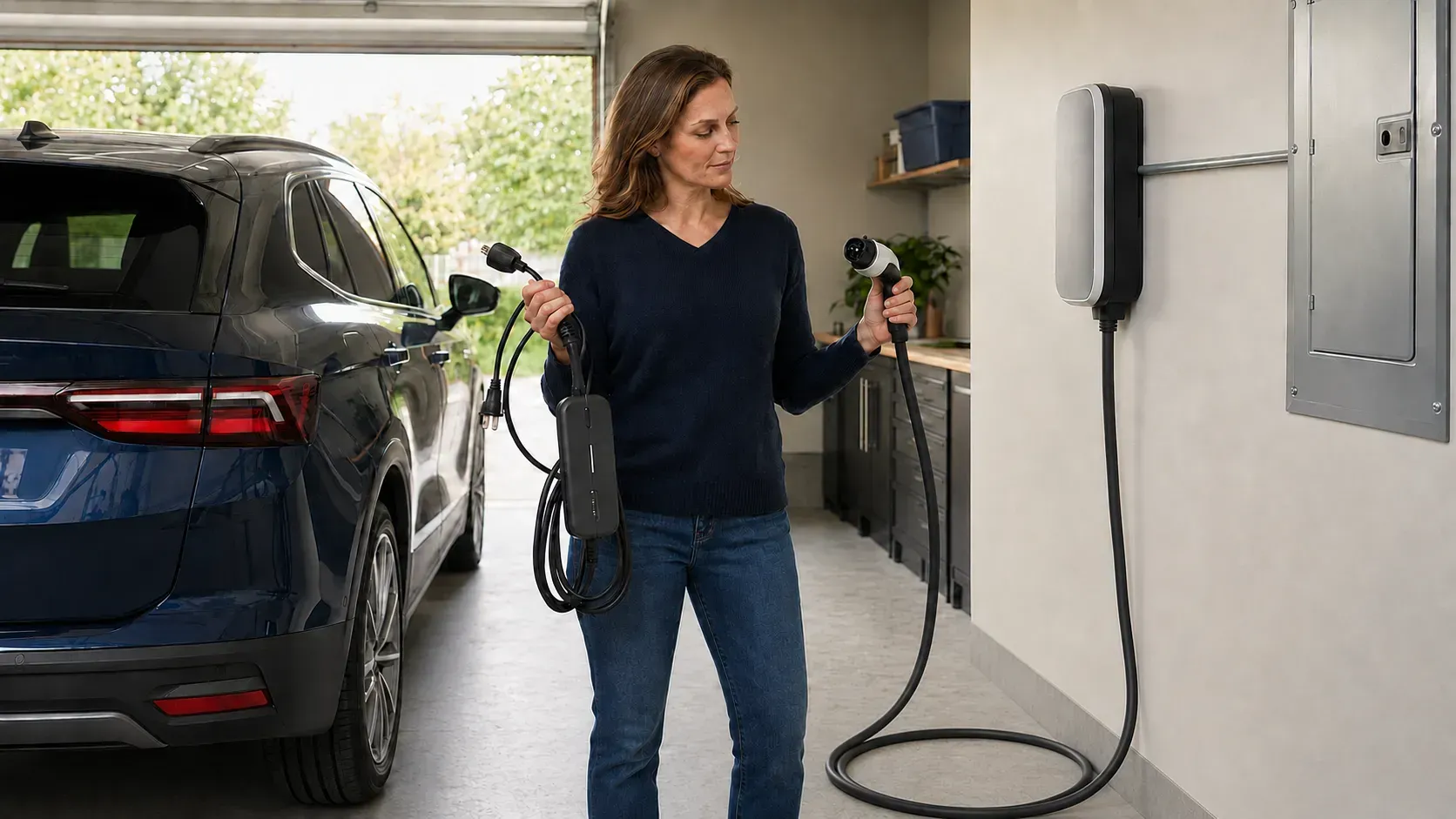
Some Level 2 chargers plug into a 240-volt receptacle, while others are wired directly to a dedicated circuit.
A plug-in charger can be easier to remove or replace, but the receptacle and connection add components to the installation. The receptacle must be appropriate for sustained EV charging, and additional code requirements may apply.
A hardwired charger eliminates the plug-and-receptacle connection and is often preferred for higher-output or outdoor installations. The best choice depends on the equipment, location, circuit and applicable electrical requirements.
This decision should be made as part of the installation plan rather than after the circuit has been installed.
Smart Chargers and Energy Management
A smart charger can connect to Wi-Fi and provide features such as scheduled charging, energy-use reports, notifications and remote control. Some systems can also coordinate charging between two vehicles or respond to changing household electrical demand.
These features can be useful, but they depend on reliable connectivity and compatible hardware. A charger located in a detached garage or far from the home’s router may need improved Wi-Fi coverage.
Smart features should support the installation—not substitute for correct circuit sizing and electrical protection. A connected charger still requires a properly designed and permitted electrical installation.
Explore the benefits and limitations of smart EV chargers, scheduling and energy management.
Consider When You Charge, Not Just How Fast
EV charging increases household electricity use, so the time of day you charge can affect operating costs under a time-of-use rate plan.
PG&E offers rate options intended for homes with electric vehicles, but the best choice depends on the household’s complete usage pattern—not only the EV. A rate with attractive off-peak charging prices may be less beneficial if significant household electricity is consumed during higher-priced periods.
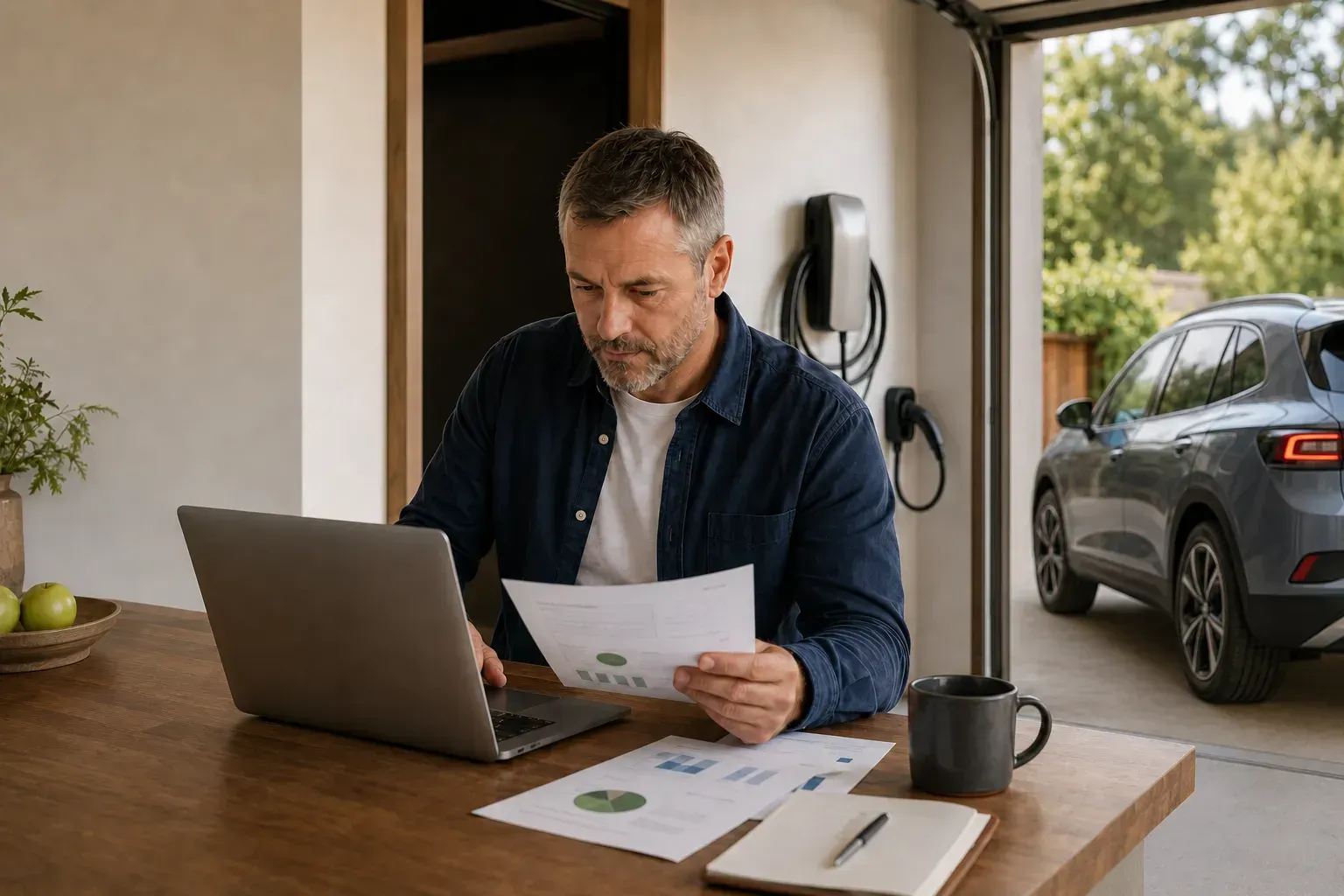
Before changing plans, compare your current usage, expected charging demand and ability to schedule charging. PG&E provides information about home EV charging and available rate options.
Because rates and program terms can change, verify current details directly with PG&E.
Permits and Inspections Matter
A permanently installed Level 2 charging circuit will generally require a permit and inspection. The permit process helps confirm that the circuit, conductor size, breaker, equipment and installation method meet applicable safety requirements.
The City of Santa Rosa provides an online permitting system and publishes requirements for EV charging station construction documents. Requirements can vary with the project, particularly when panel work, service changes or more complex equipment is involved. Current information is available through the city’s building permit resources.
A qualified installer should identify the permit requirements, prepare the necessary documentation and arrange the final inspection. Learn more in our guide to EV charger permits in Santa Rosa.
What Determines Installation Cost?
There is no single useful price for every home EV charger installation. The equipment itself is only one part of the project.
Cost can be affected by:
- Charger model and output
- Available panel capacity
- Required circuit size
- Distance from the panel
- Wiring route and accessibility
- Finished walls or difficult crawl spaces
- Indoor versus outdoor placement
- Trenching or other site work
- Permit requirements
- Panel, service or load-management upgrades
A site-specific evaluation provides a far more reliable estimate than a broad online calculator. A good quote should explain the proposed charging capacity, installation route, included permit work and any assumptions that could change the final cost.
Plan for the Home You Will Have Tomorrow
The ideal installation should solve today’s charging needs without ignoring likely changes. That does not mean every homeowner should install the largest possible circuit. It means discussing future needs before the work begins.
If you expect another EV, solar installation, battery storage, a heat pump or other major electrical equipment, tell the electrician. In some homes, planning the panel space, conduit route or load-management strategy now can make a later upgrade easier.
A well-designed home-charging system should be safe, convenient and understandable. It should fit naturally into your daily routine while leaving sensible room for the future.
Ready to evaluate your options? Contact us to discuss your Santa Rosa home, vehicle and charging needs, and we will help you determine the most practical next step.
Contact Us
Contact Us - Blog - Ultimate Guide